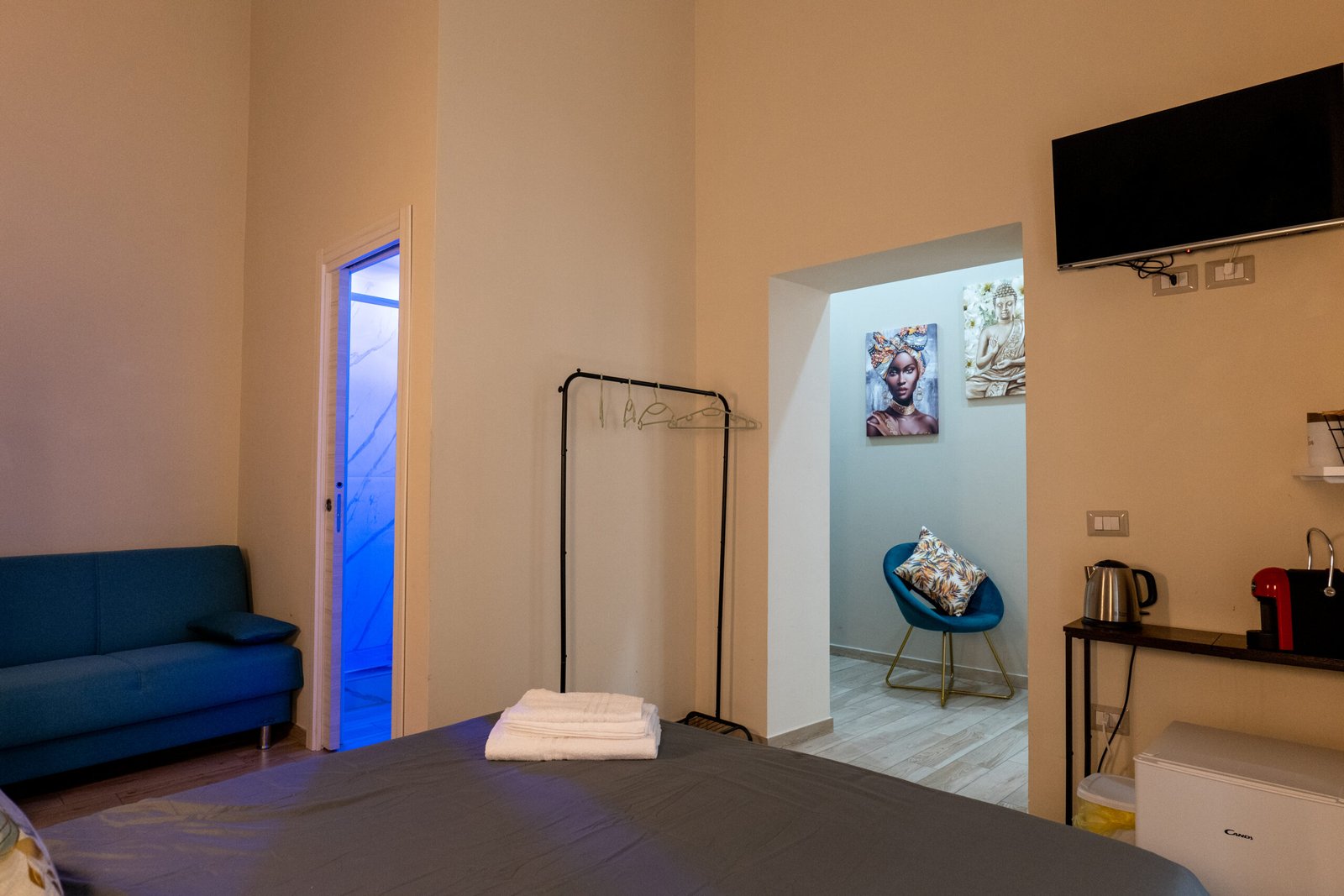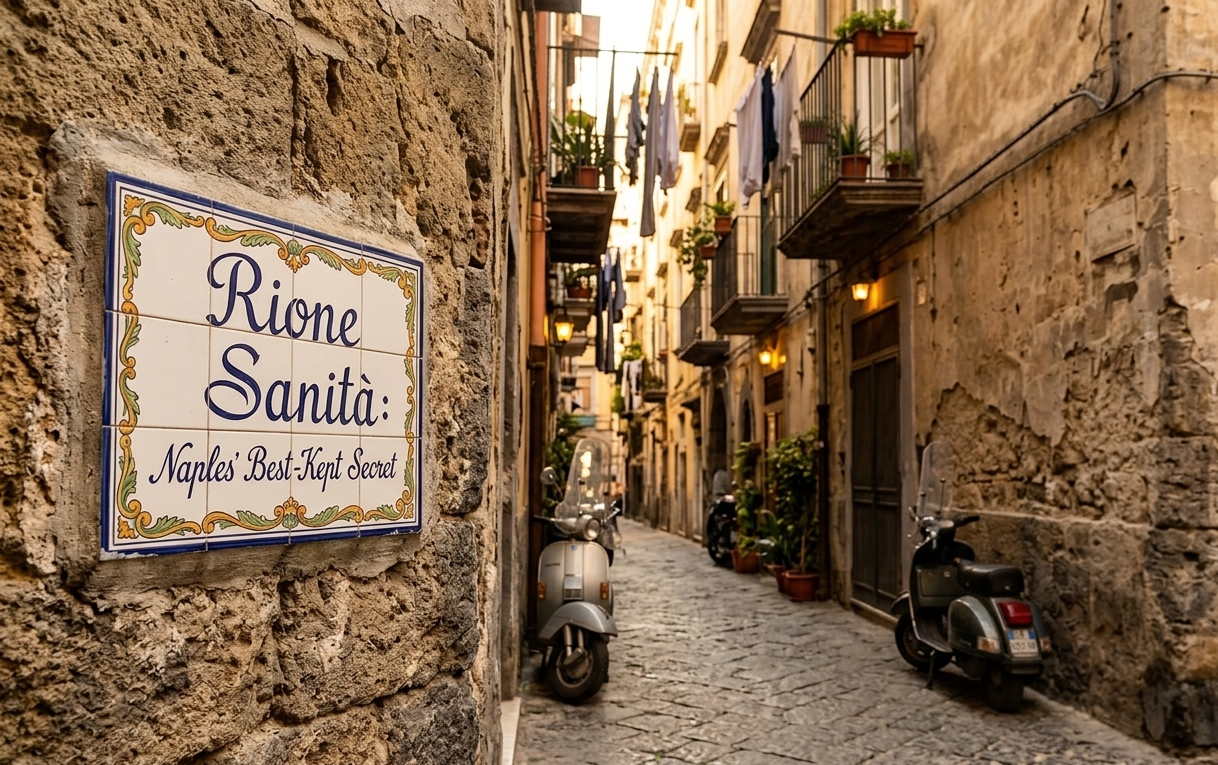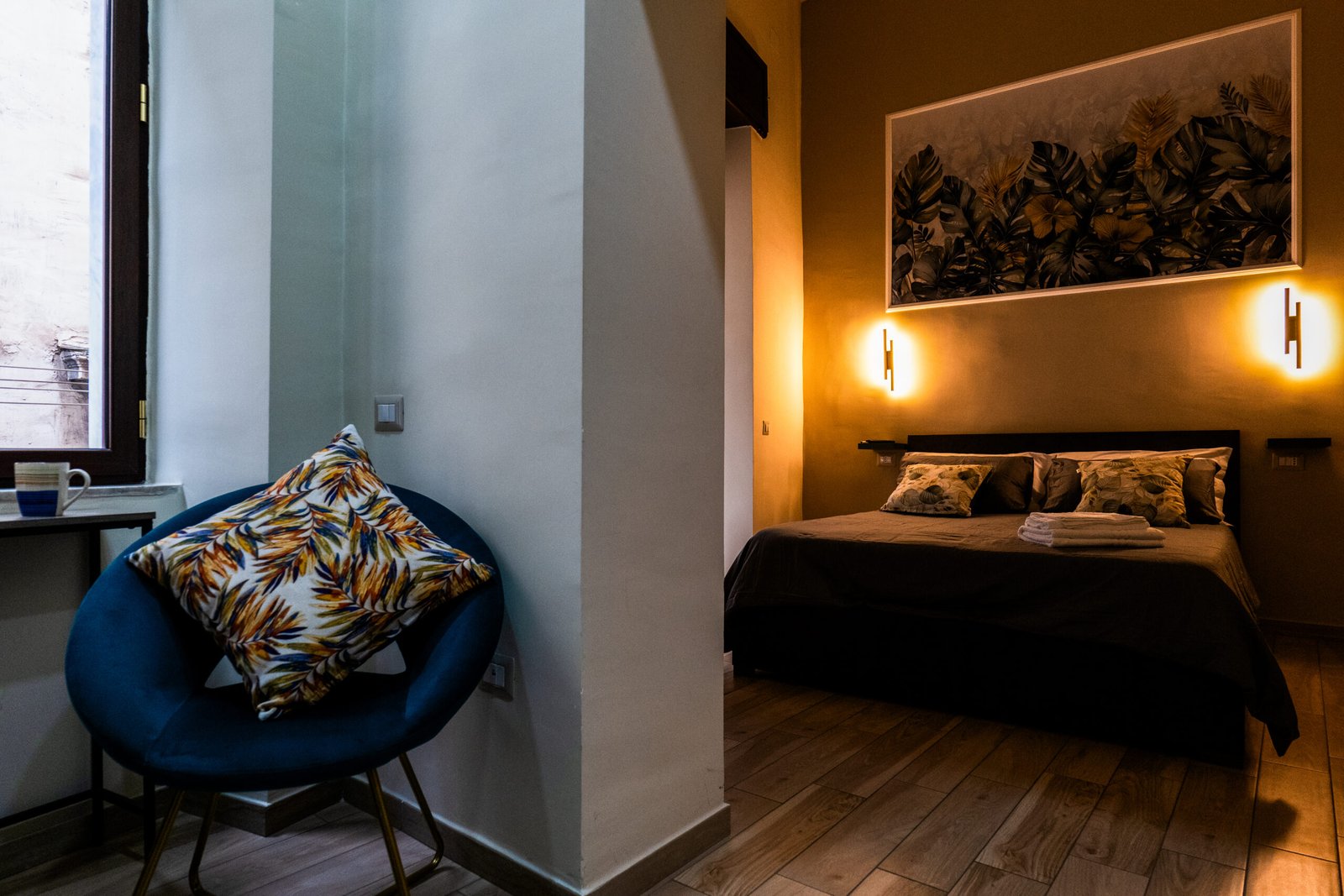

Naples doesn’t reveal itself from a bus window. It reveals itself on foot, one narrow vicolo at a time, with laundry strung overhead and the smell of fresh sfogliatelle drifting out of a bakery you weren’t planning to stop at — until you did. Staying at Stella Mia Luxury Rooms puts you right in the middle of that experience. We’re tucked into Vico San Felice, in the heart of Centro Storico, one of the oldest continuously inhabited urban centers in Europe and a UNESCO World Heritage Site. Everything on this list is reachable on foot, most of it within fifteen minutes of your room.
This isn’t a generic “top ten Naples” list. It’s a walking guide built around where you’re actually staying, so you can step outside, turn a corner, and start.
Start With Spaccanapoli, the Street That Splits the City
Spaccanapoli literally means “Naples splitter” — a dead-straight street that has cut through the ancient Greek and Roman grid since antiquity. It’s not one official street name but a chain of them (Via Benedetto Croce, Via San Biagio dei Librai, and others), and walking its length is the single best introduction to the city’s layered history. You’ll pass baroque churches, tiny artisan workshops, presepe (nativity scene) craftsmen on Via San Gregorio Armeno, and street vendors selling everything from fried pizza to lucky horn charms.
Give yourself at least two unhurried hours here. This is a street for wandering, not checking boxes.
The Duomo di Napoli and the Blood of San Gennaro
A short walk from Spaccanapoli brings you to the Cathedral of Naples, home to the relics of San Gennaro, the city’s patron saint. Twice a year, thousands gather here for the “Miracle of San Gennaro,” when his dried blood is said to liquefy. Even outside those dates, the cathedral’s chapel is one of the most ornate spaces in the city, with silver reliquaries and Baroque ceiling frescoes worth the detour alone.
Underneath the cathedral, you can also descend into the Naples Underground (Napoli Sotterranea) or explore the excavated Greek and Roman ruins that sit beneath the current street level — a reminder that Naples is really a city built on top of several older cities.
Cappella Sansevero: The Veiled Christ
If you only have time for one museum-style stop, make it this one. The Sansevero Chapel houses the Veiled Christ, a marble sculpture so technically astonishing that visitors regularly assume the “veil” over the figure is real fabric. The chapel is small, so it doesn’t demand a huge time commitment, but it does require advance booking — tickets sell out days ahead in high season, so reserve before you arrive in Naples.
Piazza del Gesù Nuovo and Santa Chiara
Two of the city’s most important churches sit almost across the street from each other. Gesù Nuovo has a striking diamond-point stone facade and an explosively decorated Baroque interior. Santa Chiara, by contrast, offers something quieter and arguably more memorable: a cloister covered in hand-painted 18th-century majolica tiles depicting rural scenes, vines, and lemons. It’s one of the most photogenic — and peaceful — spots in the entire historic center.
Eat Like You Live Here, Not Like You’re Visiting
Centro Storico is where Neapolitan food culture is loudest and most authentic, and you don’t need a reservation or a guidebook to eat well here — you need to follow the lines.
- Pizza: Naples invented pizza, and the historic center is where the debate over “the best” is fought daily. Expect queues at the famous names, but don’t overlook the smaller, unmarked spots locals actually queue for on a Tuesday night rather than a Saturday for tourists.
- Fried food (frittura): Look for stalls selling arancini, crocché (potato croquettes), and frittatine di pasta wrapped in paper. This is street food built for walking, not sitting down.
- Sfogliatelle: The shell-shaped pastry, either riccia (crisp, layered) or frolla (soft, shortbread-like), is best eaten warm, ideally within an hour of your morning walk.
- Caffè: A Neapolitan espresso is meant to be drunk standing at the bar, in under two minutes, often with a glass of water alongside it. It’s a small ritual, but doing it the local way changes how the whole city feels.
If you want recommendations tailored to that day — where the fresh batch just came out of the oven, or which fritture stand has the shortest line — just ask us at check-in. We live here.
San Gregorio Armeno: Christmas Every Day of the Year
Even in July, this narrow street sells nativity figurines year-round, ranging from traditional shepherds and Holy Family sets to cheeky caricatures of politicians, footballers, and pop culture figures made in the same centuries-old craft tradition. It’s touristy, yes, but it’s also a genuinely unique Neapolitan institution and a fun ten-minute detour if you’re already walking Spaccanapoli.
Napoli Sotterranea: The City Beneath the City
For a different perspective on Naples, take a guided tour into the tunnels, aqueducts, and cisterns carved out beneath the historic center over the past 2,400 years. Parts were used as bomb shelters in World War II, and the network still runs beneath the streets you’ll be walking every day. Tours typically run 60–90 minutes and are a good option if the afternoon heat gets intense.
Where the Center Meets the Water
Centro Storico isn’t coastal, but it’s an easy walk or short taxi ride to Naples’ waterfront, where Castel dell’Ovo sits on a small islet jutting into the Bay of Naples. If you’re staying with us and want to extend the day, this is also where our Rent a Boat partners operate from — a half-day on the water gives you views of the city, Vesuvius, and the coastline that you simply can’t get from the street level. It pairs naturally with a morning spent in the historic center and an afternoon on the water.
Practical Tips for Exploring Centro Storico on Foot
- Wear real shoes. The volcanic stone streets (basoli) are beautiful but uneven, and many are still cobbled in the original layout.
- Go early or go late. Mid-morning and early evening are the sweet spots — cooler, fewer crowds at major sites, and the light is better for photos.
- Carry small cash. Many of the best food stalls and small shops don’t take cards.
- Book the Sansevero Chapel in advance. This is the one stop on this list where showing up without a ticket can mean missing it entirely.
- Ask before photographing people. Centro Storico is a living neighborhood, not a stage set — locals are generally warm, but a nod or a smile goes a long way.
Staying Central Makes All the Difference
The reason this itinerary works as a single, unhurried day (or two, if you want to slow down) is location. From Stella Mia Luxury Rooms on Vico San Felice, you’re not commuting into the historic center each morning — you’re already in it. Head back to your room for an afternoon break on your private balcony — whether that’s our Camera King con Balcone or the Camera Matrimoniale Deluxe con Balcone — then go back out for dinner once the evening crowds thin and the city cools down.
If you’re planning a stay and want more of these locally-built itineraries — including day trips to Pompeii and the Amalfi Coast, or a full food-focused walking route — check our other guides, or reach out directly and we’ll put together a plan around your dates.
Ready to explore Centro Storico from the heart of it? Book your stay at Stella Mia Luxury Rooms